Keep Dirt and Oil Separate: Texas Land Rights Guide
The Deal Brief
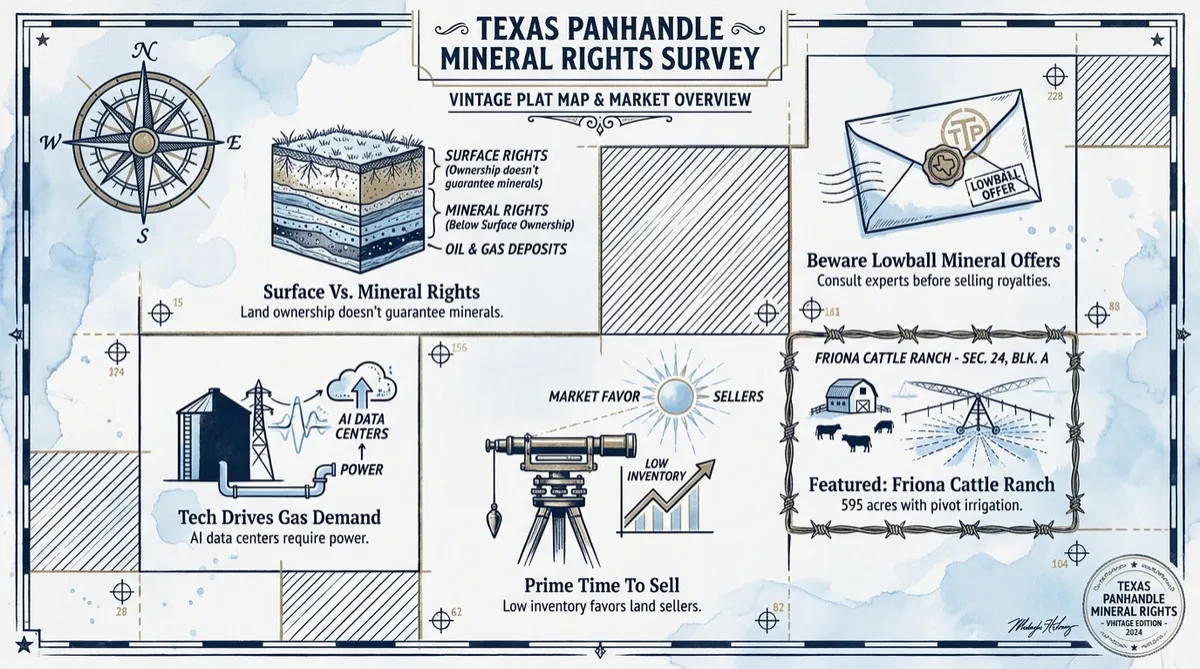
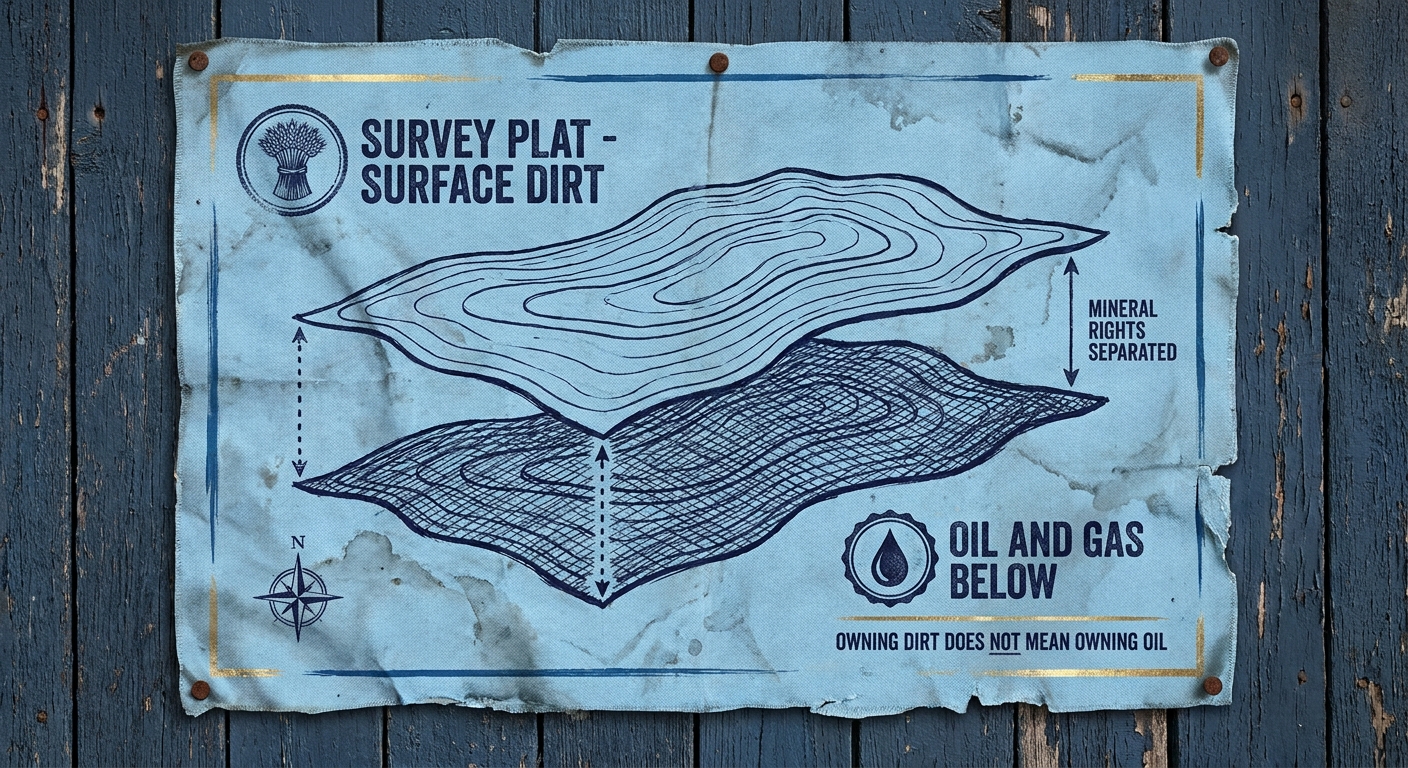
Keep your dirt and your oil money separate. In Texas, the surface and the minerals underneath are often owned by different people.
Do not rely on a standard title company to tell you what you own underground. You need to hire a land man to read the old county records.
Throw away the cheap offers you get in the mail from companies trying to buy your oil and gas rights.
Treat your land and your minerals as two separate deals when you go to sell, so you can get the best price for your family.
The Market Shift
The Old Way
Many landowners think that when they buy a farm, they own everything from the sky above all the way down to the center of the earth. When it comes time to sell, they just put a price on the whole property and list it. They assume the title company will figure out all the paperwork. If someone asks about the oil and gas rights, the seller might just guess what they own. Or worse, if they get a letter in the mail offering a little bit of money for their mineral rights, they might just take it without asking questions. This old way leaves money on the table. It also causes headaches for the family down the road when records get lost or confused.
The Better Way
Craig Cooper has been part of close to a thousand land deals or more in the Texas Panhandle. He takes a steady, careful approach. The better way is to split the property into two different parts in your mind. The first part is the surface dirt, the grass, the fences, and the barns. The second part is what hides underground, like oil and natural gas.
Instead of guessing, a smart landowner hires a professional called a land man to go to the courthouse and find the truth. The landowner finds out exactly what they own before they ever put a price on the farm. If they do own the minerals, they make a careful choice to either keep them for the kids or sell them for a fair price. They never sell in a hurry. They understand that holding onto those rights can protect the family for years to come.
The Land Philosophy
When you deal with Texas farm and ranch land, you have to remember that the past still controls the present. Most of the oil and gas contracts in the Texas Panhandle go back almost a hundred years, and over that time land has often traded without the minerals going with it.
Today, it is very normal to buy a piece of land and only get the dirt. The person who owns the minerals underneath might not own any of the surface at all. Because of this, you have to treat your farm as a surface business first.
"It's pretty rare in a Texas Panhandle for that to happen... cause you never know what comes down the road." — Craig Cooper
If you are lucky enough to own the minerals under your farm, you need to protect them. The world always needs energy. New drilling methods are invented all the time. What looks like a dry hole today might be a steady check in the mail tomorrow. Keep a firm grip on what you own and pass it down safely.
The Deal Blueprint
Read the True Title
What to Do: Hire a land man to go to the local courthouse and search the deep records to see who owns the oil and gas under your farm.
Why it Matters: A standard title company will only look at who owns the surface dirt and the buildings. They will not dig into the old oil and gas records. If you try to sell your farm and promise the buyer they are getting the minerals, you could be setting yourself up for a lot of trouble. You might not actually own them. You need a specialist who knows how to read old oil leases and trace them through the years. Doing this homework up front stops bad surprises from ruining your sale.
"Title companies do not deal with oil and gas." — Craig Cooper
Throw Away the Cheap Mail Offers
What to Do: When a stranger sends you a letter offering to buy your royalty interests for cash, put the letter in the trash.
Why it Matters: Those letters are generally lowball offers, and they are not a very good idea of what your rights are really worth. Royalty owners like to joke that natural gas must be fixing to go up when the letters start showing up. On the livestream, Steve pointed out that big data centers, like the facilities Meta is building in Louisiana, need a lot of power, and much of that electricity is generated with natural gas. That kind of demand could push natural gas prices up in the future. Protect yourself and do not take the first offer that comes your way.
"I keep getting these letters in the mail for people want to buy my royalty interest... and they're really lowball offers on generally those, and I'd encourage people not to ever accept that offer." — Craig Cooper
Separate the Dirt from the Oil
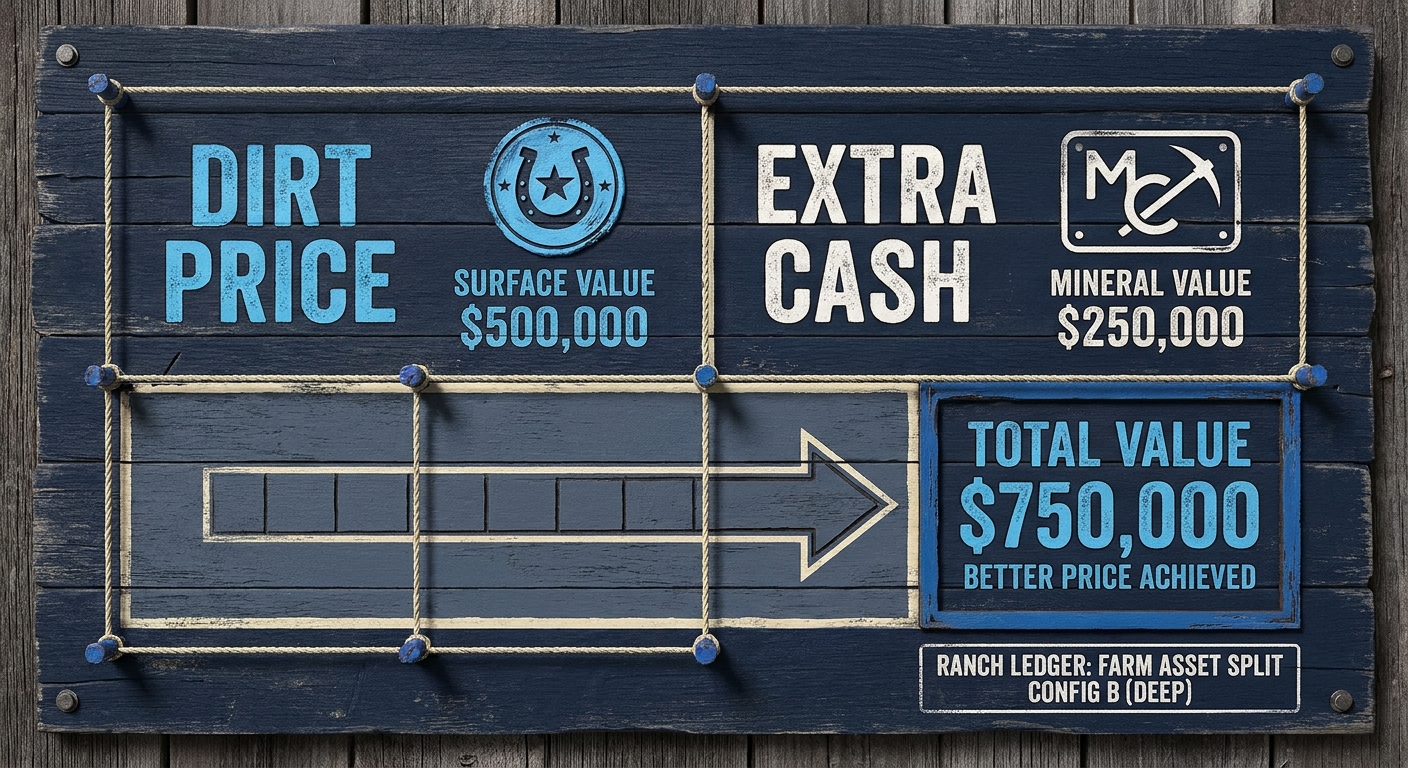
What to Do: When you sit down with your real estate broker to sell your farm, price the surface dirt on its own. If you want to sell the minerals too, price them separately.
Why it Matters: A real estate broker sells land. They do not sell oil and gas. Oil and gas minerals are not treated as real estate. If you decide to sell your mineral rights along with your dirt, the buyer should pay a separate price for them. For example, if your land sells for two thousand dollars an acre, unleased minerals might bring an extra two hundred and fifty dollars an acre on top of that. This money goes straight to you. You do not pay a real estate commission on the sale of the oil and gas minerals. It is extra value in your pocket. Keep the contracts clear and separate.
"As a real estate, we sell surface. We can't deal in oil and gas minerals. Now we reserve them on the contract." — Craig Cooper
Pass the Checks to the Next Generation
What to Do: Know that your mineral rights will pass down to your family, even if they live far away from the farm.
Why it Matters: Mineral rights get passed down just like land does, in percentages. A lot of people here in the Panhandle own a percentage of minerals somewhere without owning the surface themselves. Even a small share can bring a steady check in the mail every month if a well is pumping. This is how many families in the Texas Panhandle have built lasting wealth. The farm might get sold, but the oil and gas rights can stay in the family.
"They get passed down just like land would, and in those percentages." — Craig Cooper
The Podcast Conversation
Surface ownership and mineral interests can follow different paths through a family’s history. Understanding those separate interests helps owners ask clearer questions before making a decision.
In this episode, Craig discusses mineral reservations, inherited royalty shares, and offers to purchase those interests. The conversation explores why the dirt and the oil should be considered separately.
The Landowner's Advantage
Taking the time to understand your mineral rights gives you a long quiet peace of mind. When you know exactly what is yours, nobody can push you into a cheap sale. You can look your kids in the eye and tell them the true value of the ground they are standing on.
Farming and ranching is hard work. The rain does not always come when you need it, and cattle prices go up and down. But land holds its worth. And the minerals under that land are a quiet strength for your family. If you keep things simple, ask the right questions, and use good local help, you will protect what you have worked so hard to build.
Contact Craig at (806) 484-1190 or [email protected].