Maximize Texas Land Equity: Never Take the First Offer
The Deal Brief
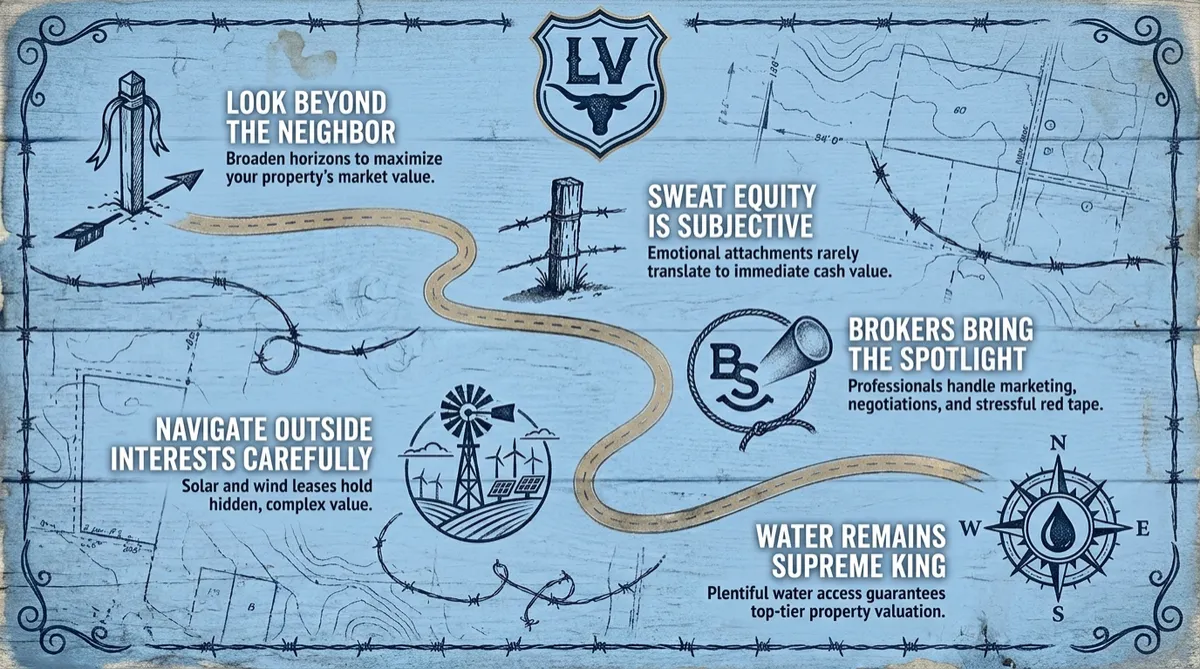
The Proximity Paradox: A neighboring landowner often has the highest financial incentive to buy your land, but according to Craig, they will only offer their maximum price when forced to compete with a broader, national market.
The Danger of the "Dairy Queen Deal": Selling off-market based on local coffee-shop gossip anchors your property's value to outdated metrics, stripping your family of the true market premium.
Monetizing "Sweat Equity": Multi-generational land carries heavy emotional weight. Craig’s approach removes the emotional friction, ensuring that decades of hard work are objectively valued and marketed to well-capitalized buyers.
Navigating the Energy Quicksand: Outside interest from solar and wind developers introduces complex lease structures and mineral rights disputes. Navigating these deep waters requires an experienced guide to protect the core asset.
The Market Shift
The Old Way: The Coffee Shop Consensus
For decades, the standard operating procedure for selling farm and ranch land in the Texas Panhandle has relied heavily on the "Coffee Shop Consensus." In this traditional model, property values are loosely established based on rumors heard at the local farm store or over a handshake at the Dairy Queen. The Old Way operates on proximity and convenience. A landowner decides to sell, mentions it to the neighboring farmer, and accepts a quiet, off-market offer to avoid the perceived hassle of a public listing.
While this status quo feels comfortable and neighborly, Craig argues that it fundamentally works against the landowner's best financial interests. The Old Way relies on an isolated echo chamber where the only active buyer is the one who happens to share a fence line. This method severely limits competitive tension, often resulting in a transaction that leaves a substantial amount of family equity on the table. Furthermore, it assumes that the neighbor's anecdotal assessment of the land's value is the absolute ceiling for what the market will bear.
Craig’s Data-Driven Alternative
Craig’s approach shatters the local echo chamber by introducing high-exposure, data-driven market tension. According to Craig, true property value can only be discovered when a farm or ranch is positioned in front of the largest possible pool of qualified buyers—locally, regionally, and nationally.
In Craig's modernized framework, the neighbor is still a highly valued participant in the transaction, but they are no longer the only participant. By deploying advanced marketing strategies, leveraging digital platforms, and capturing high-resolution drone footage, Craig forces the local market to compete with outside capital. This shift from a localized whisper campaign to a high-authority, broad-market strategy ensures that the unique topographical features, water rights, and agricultural potential of the property are exposed to buyers willing to pay an absolute premium.
The Land Philosophy
To extract the maximum value from a Texas farm or ranch, a landowner must undergo a fundamental mental shift regarding how they view their own property. Over decades of ownership, families develop what Craig identifies as a "Familiarity Discount." Landowners become so accustomed to their own dirt, their own playa lakes, and their own well output that they begin to take these critical assets for granted. They anchor their expectations to outdated market conditions and fail to see the property through the eyes of a heavily capitalized outside investor.
This mental hurdle is compounded by the deeply emotional nature of multi-generational land transfers. According to Craig, families often struggle to separate the objective market value of the dirt from the immense "sweat equity" poured into it by previous generations. It is incredibly difficult to put a price tag on a grandfather's lifelong labor. When a property is being divided multiple ways among heirs, this emotional weight can paralyze the decision-making process or lead to infighting. Craig’s philosophy centers on introducing objective, third-party authority to the equation. By removing the emotional burden from the family, he is able to accurately value the tangible assets of the land without diminishing the legacy of the hard work that maintained it.
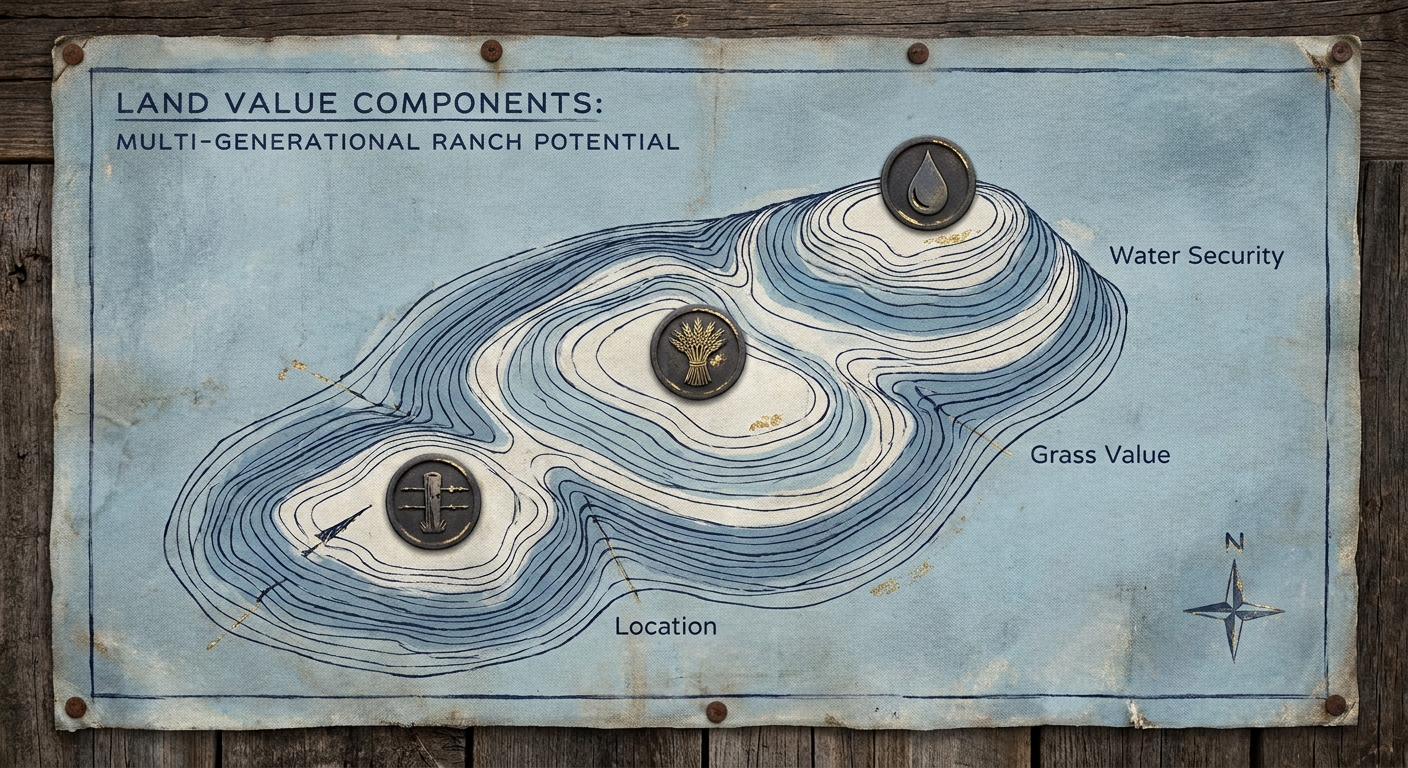
"The true market value of a multi-generational Texas ranch is never found by looking backward at what your family put into the dirt; it is found by aggressively marketing its future potential to a buyer who recognizes that they aren't just buying acreage—they are buying established carrying capacity, water security, and strategic proximity." — Craig Cooper
The Deal Blueprint
To successfully execute this modern land strategy and maximize the financial return for the selling family, Craig utilizes a proprietary, multi-step transaction framework.
Force the Market to Establish the Baseline
The most common mistake a landowner makes is offering their property to a neighbor or current tenant without first establishing a baseline market value through broad exposure. According to Craig, a neighbor inherently possesses a strategic advantage. Because their operation is adjacent to the property, they can farm or ranch the new acreage much more cheaply than a buyer located thirty miles away. They don't have to move equipment across the county, and their logistical overhead is virtually zero.
Because of this built-in discount, the neighbor can and should pay a premium for the land. However, they will rarely offer that premium voluntarily. The Action required here is to list the property widely—utilizing national land platforms and aggressive digital marketing—before allowing the neighbor to make their final decision. By bringing outside eyes to the deal, you manufacture the competitive tension required to raise the baseline.
The Business ROI of this step is total price optimization. The neighbor or tenant still gets a fair opportunity to purchase the ground, but they must now do so at a price dictated by the open market, ensuring the selling family captures the maximum possible yield from the sale.
"[I think the whole idea is, you know, when you live, when you want to sell a property, I think you need to put it in front of as many people as possible.]" — Craig Cooper
Deconstruct the Hidden Value Metrics
No two farms are identical, yet landowners frequently price their property based on what a completely different farm sold for three miles down the road. Craig argues that this generic pricing model ignores the micro-topographical realities of the land.
The Action here involves auditing the specific, unique features of the property that command hidden premiums. This includes evaluating the soil type (identifying lighter soils versus sand), mapping out the utility of playa lakes, assessing the quality of the fencing, and, most importantly, verifying the water capacity. In the Texas Panhandle, Craig firmly asserts that water is king. A property producing 300 gallons per minute (GPM) possesses a fundamentally different economic profile than a dryland farm in the same county.
The Business ROI of this granular audit is the ability to justify a premium listing price based on undeniable, physical data. Rather than relying on neighborhood guesswork, the seller enters the market armed with a verified inventory of agricultural assets.
"[Every piece of ground is different, there's not one the same, there's never been one the same.]" — Craig Cooper
Navigate the Alternative Energy Quicksand
In recent years, the Texas land market has been flooded with outside interest from developers looking to establish wind and solar farms. While these energy leases can represent a massive influx of generational wealth, Craig warns that they are also fraught with legal and operational quicksand.
The Action is to critically evaluate these outside inquiries without blindly signing away core property rights. Solar companies, for instance, frequently attempt to secure all oil and gas mineral rights beneath their proposed panels. According to Craig, navigating these demands requires a deep understanding of historical mineral rights trading in the Panhandle, where surface owners frequently do not even own the underlying minerals. Furthermore, existing wind leases must be meticulously reviewed to understand the actual timeline of turbine deployment versus mere speculation.
The Business ROI of relying on professional representation during these energy inquiries is risk mitigation. A landowner protects their core asset from restrictive, long-term legal encumbrances while still leaving the door open to highly lucrative alternative revenue streams.
"[I think you learn a lot and learn how to avoid some quicksand, and hopefully I can help that seller along through the process there.]" — Craig Cooper
Delegate the Friction of the Transaction
The logistical reality of selling hundreds of acres of land is exhausting. When families attempt to sell property themselves—commonly known as For Sale By Owner (FSBO)—they severely underestimate the operational friction involved.
The Action in this final step of the blueprint is full delegation. Craig assumes the burden of fielding 24/7 phone calls, filtering out unqualified tire-kickers, managing the title company paperwork, and navigating the inevitable hurdles that arise during closing.
The Business ROI here is peace of mind and family preservation. By acting as the buffer between the market and the family, Craig ensures that the transaction moves forward cleanly, preventing the stress of the deal from fracturing family relationships or resulting in a botched closing.
The Podcast Conversation
A familiar buyer can make a sale feel straightforward, but convenience and market exposure are different considerations. Understanding how a wider pool of buyers sees the same ground helps a family weigh an offer against its own goals.
In this episode, Craig discusses neighboring buyers, the value of competitive exposure, and the practical work involved in a sale. The conversation connects those decisions with the family relationships and years of effort behind them.
The Landowner's Advantage
Adopting Craig’s methodology provides landowners with an insurmountable long-term competitive advantage. When you stop treating the sale of your family’s farm as a casual, neighborhood transaction and start treating it as the liquidation of a multi-million-dollar commercial enterprise, your financial trajectory changes permanently.
By refusing to settle for the "Familiarity Discount," forcing local buyers to compete with national capital, properly valuing water and soil assets, and carefully navigating the treacherous waters of energy leases, landowners ensure that they are capturing every single dollar of equity that their ancestors worked so hard to build. In Craig's words, you don't have to get "took." You simply have to be strategic.
Contact Craig at (806) 484-1190 or [email protected].