Monetize Texas Panhandle Land: Wind & Solar Lease Strategy
The Deal Brief
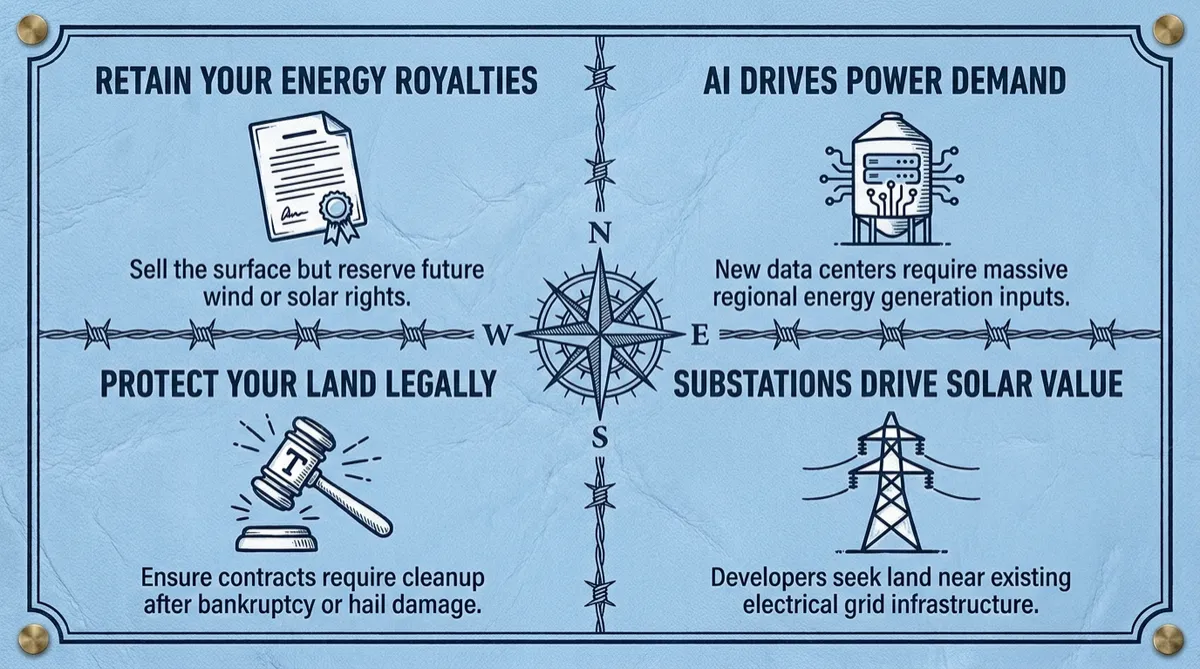
The Severance Strategy: Landowners can successfully sell the surface rights of their property while legally reserving active and future wind or solar royalties through precise deed structuring.
The Data Center Boom: The influx of massive AI and cloud data centers in the Texas Panhandle is creating unprecedented demand for localized energy inputs (wind, solar, natural gas, and nuclear), fundamentally altering how rural land is valued.
The Bankruptcy Trap: Renewable energy contracts must include ironclad cleanup clauses; without them, landowners risk being abandoned with obsolete, decaying infrastructure if the developer goes bankrupt.
The Title Clean-Up Imperative: Maximizing land value for energy development requires actively forcing title companies to purge expired, century-old utility easements from Schedule B of the title commitment.
The Market Shift
The Old Way: Selling the Dirt and Hoping for the Best
For generations, the transaction of rural land in the Texas Panhandle followed a highly predictable, traditional script. A buyer and a seller would negotiate the price per acre based on agricultural output, water availability from the Ogallala Aquifer, and surface conditions. The only complex variable was the legacy oil and gas mineral estate, which had likely been severed from the surface rights decades ago and rarely changed hands. Under this old model, when a landowner sold the dirt, they sold the entire future utility of the surface. If an energy developer arrived a decade later wanting to install wind turbines or a solar farm, the new buyer reaped one hundred percent of that unexpected financial windfall, while the original legacy family was left completely out of the equation.
The Modern, Data-Driven Alternative
According to Craig, that antiquated approach leaves massive amounts of generational wealth on the table. The Texas Panhandle is undergoing a profound transformation. It is no longer just the agricultural heartland of Texas; it is rapidly becoming the energy battery for the global technology sector.
With massive data centers, including Google's facility near Claude and others under construction north of Amarillo, setting up operations in the Panhandle, the demand for off-grid and supplementary energy generation is skyrocketing. Craig notes that these facilities require colossal, uninterrupted inputs of power. They are actively seeking localized energy production to avoid pulling solely from an already strained Texas electrical grid.
In this new reality, Craig argues that selling a farm or ranch requires a modernized strategy. The land is no longer just dirt, grass, and water; it is a three-dimensional asset. A savvy landowner can now sell the agricultural surface rights to an operator while simultaneously carving out and retaining future renewable energy lease royalties. By recognizing the changing macroeconomic landscape of the region, Craig positions sellers to capitalize on the tech boom without having to hold onto the physical dirt forever.
The Land Philosophy
To thrive in this new market, landowners must undergo a fundamental mental shift regarding what they actually own. Craig champions a proprietary approach to land valuation that transcends the physical topsoil.
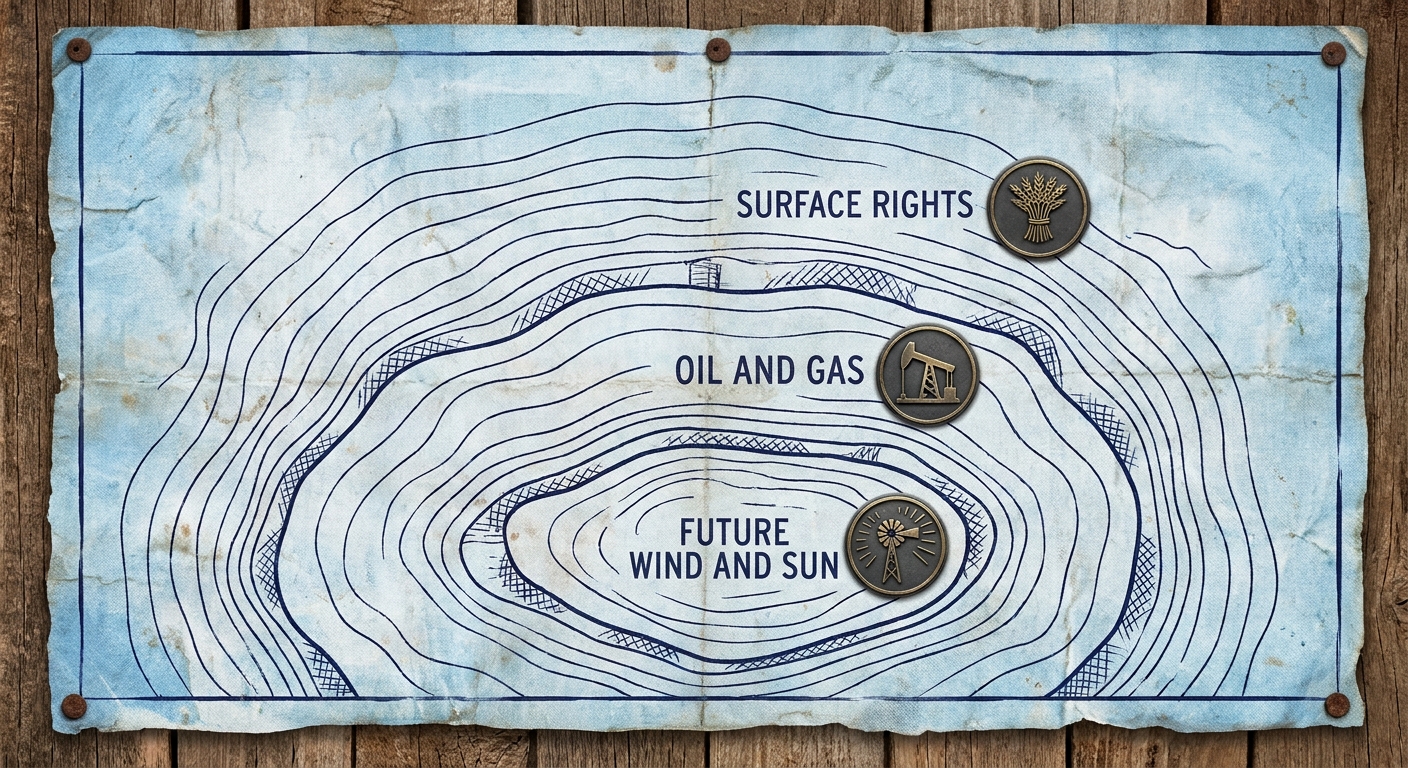
According to Craig Cooper, you must view your property not as a single, indivisible asset, but as a stacked portfolio of distinct property rights. The agricultural utility is one layer. The legacy oil and gas minerals are another. But the future energy generation potential—the wind that blows across it and the sun that hits it—represents an entirely new, highly negotiable layer of wealth.
"The Surface-to-Sky Protocol dictates that the highest and best use of Panhandle land now requires separating agricultural operations from energy generation potential. A legacy landowner should never surrender future renewable royalties simply because they are divesting the topsoil. By meticulously engineering the deed, we can preserve a family's financial interest in the AI and data center boom long after they have handed over the keys to the gates." — Craig Cooper
This framework delivers a profound Aha! moment for legacy sellers: You do not have to choose between cashing out of your farm today and missing out on a lucrative wind or solar contract tomorrow. With the right representation, you can do both.
The Deal Blueprint
To execute this modern land transaction safely and profitably, Craig outlines a definitive, step-by-step blueprint. This framework ensures that landowners capture the upside of the renewable energy boom while legally shielding themselves from the heavy liabilities associated with industrial development.
Engineering the Deed for Renewable Severance
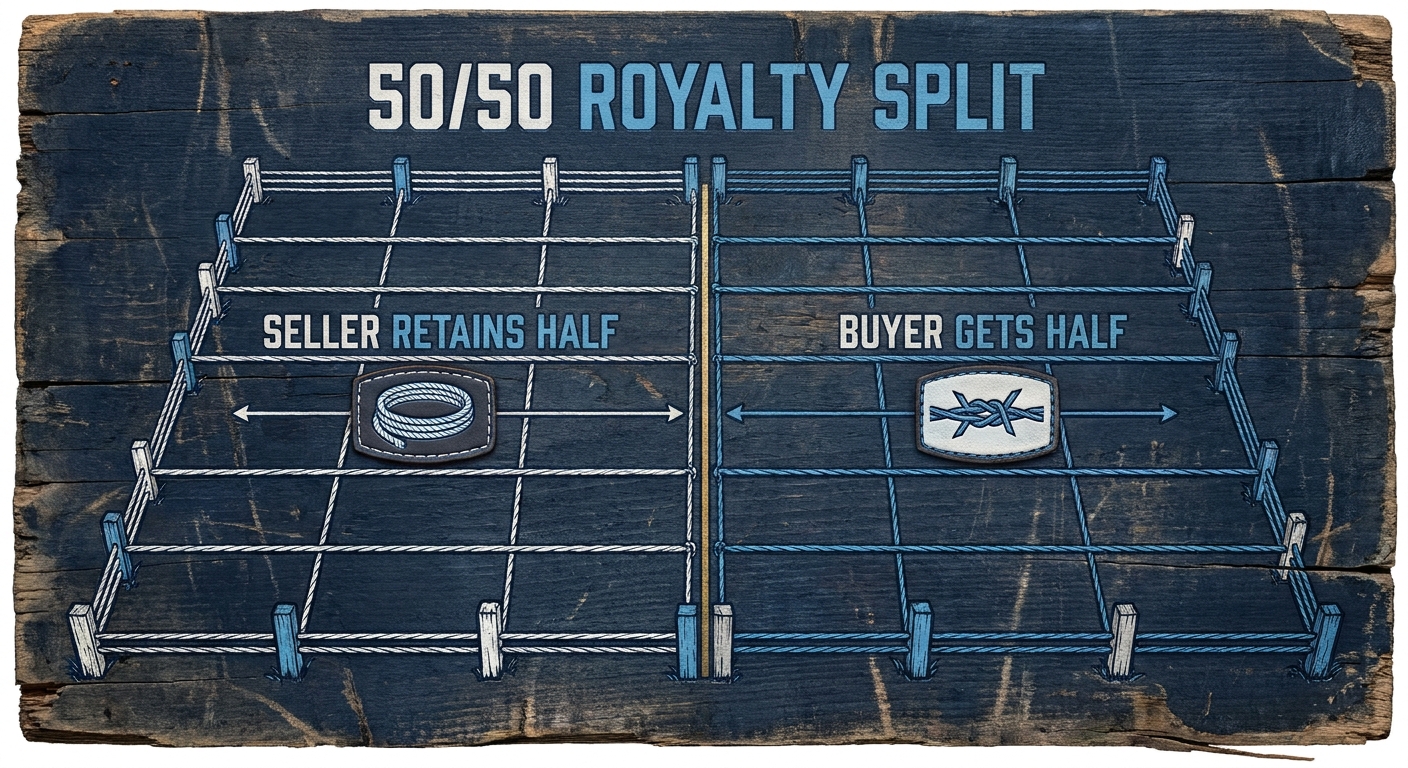
The Action: When negotiating the sale of a property that has existing turbines or strong potential for future solar and wind development, the seller must explicitly reserve their rights to those royalties in the deed. Craig Cooper advises that before the infrastructure is ever built, the allocation of these future rights is entirely negotiable between the buyer and the seller. Because the buyer will own the surface and have to deal with the physical disruption of construction, a standard, clean approach is to negotiate a 50/50 split of future renewable royalties between the buyer and the seller.
The Business ROI: This strategy allows the seller to liquidate their real estate asset for immediate capital while keeping a long-term, passive revenue stream intact. The buyer is incentivized to agree because they still receive half of a massive potential payout that they did not have to originate.
"You can sell the surface even if you're getting wind royalties… and you can reserve that in the deed, and that's you reserving your royalties and any future royalties. And so it's important to have the right language in the deed." — Craig Cooper
Bulletproofing Contracts Against Developer Bankruptcy
The Action: When an energy company approaches a landowner with a solar or wind lease, the initial numbers can look incredibly enticing. However, Craig Cooper warns that these agreements are heavily weighted in favor of the developer. Landowners must hire specialized legal counsel to aggressively redline these contracts. The most critical inclusion is strict, inescapable language regarding cleanup, land restoration, and damage liabilities (such as catastrophic hail damage to solar panels).
The Business ROI: Protecting the physical integrity of the land is paramount. If an energy developer goes bankrupt—a scenario Craig Cooper notes is alarmingly common—the landowner can be left with millions of dollars worth of decaying, obsolete industrial equipment on their property. Proper legal structuring ensures the operator is bonded or financially bound to remediate the land to its original state, protecting the property's underlying agricultural value.
"Once they're done, they could just walk off and leave you with the mess… Cause they're broke. Generally, they're bankrupt." — Craig Cooper
Purging Schedule B and Phantom Easements
The Action: When preparing a property for sale or for a massive energy lease, Craig Cooper mandates a rigorous review of the title commitment, specifically focusing on "Schedule B, Part 2." This section of a title document lists all the exceptions to title insurance, which often include ancient, 100-year-old utility easements that have long since been abandoned. Craig Cooper advises landowners to actively pressure the title company to investigate and remove any inactive, expired easements before closing.
The Business ROI: A cluttered title scares off institutional investors and energy developers. If a solar company sees a chaotic web of century-old easements crossing the property, they may move on to an easier target. By forcing the title company to do their job and purge these phantom encumbrances, the landowner presents a clean, highly developable asset that commands a premium valuation.
Navigating Out-of-State Buyer Misconceptions
The Action: As the Panhandle energy boom accelerates, out-of-state buyers and developers are flooding the market. According to Craig Cooper, these outsiders often fundamentally misunderstand Texas property law—specifically the dominance of the severed mineral estate. Solar developers frequently claim they must own the legacy oil and gas rights to build a solar farm. Craig Cooper steps in to educate these buyers that acquiring 100-year-old, heavily fractionated oil and gas minerals is virtually impossible and completely unnecessary for surface development.
The Business ROI: By expertly managing the expectations of out-of-town developers and pointing them toward viable workarounds (like surface waivers or designated drill sites), Craig Cooper prevents lucrative deals from falling apart over legal misunderstandings. Furthermore, he helps energy scouts identify the true geographical drivers of value, such as proximity to existing electrical substations, ensuring the right properties are matched with the right developers.
"I just encourage sellers out there that really, really have somebody look over a wind lease before you sign it… They could really tie up your land and make it impossible for somebody to operate there if you're not careful." — Craig Cooper
The Podcast Conversation
Energy agreements can remain important long after an owner decides to sell. Thinking through the relationship between a sale and an existing lease helps a family clarify what it wants to carry forward.
In this episode, Craig discusses wind and solar leases, royalty reservations, and the language that shapes a transaction. The conversation connects those choices with the practical realities of operating and transferring agricultural ground.
The Landowner's Advantage
Adopting Craig's data-driven, legally fortified approach to land transactions provides legacy owners with a massive, long-term competitive advantage. By understanding that the Panhandle is transitioning into a vital hub for AI data centers and renewable energy, you can stop selling your property based solely on its agricultural output.
The landowners who thrive in the coming decade will be those who master the art of the severance, selling the surface to those who want to farm it, while tightly holding onto the lucrative, sky-facing royalties in the deed. They will be the ones who bulletproof their land against bankrupt operators and present clean, unencumbered titles to institutional buyers.
Contact Craig at (806) 484-1190 or [email protected].