Timing Your Farm Sale: Maximize Value With Crop Cycles
The Deal Brief
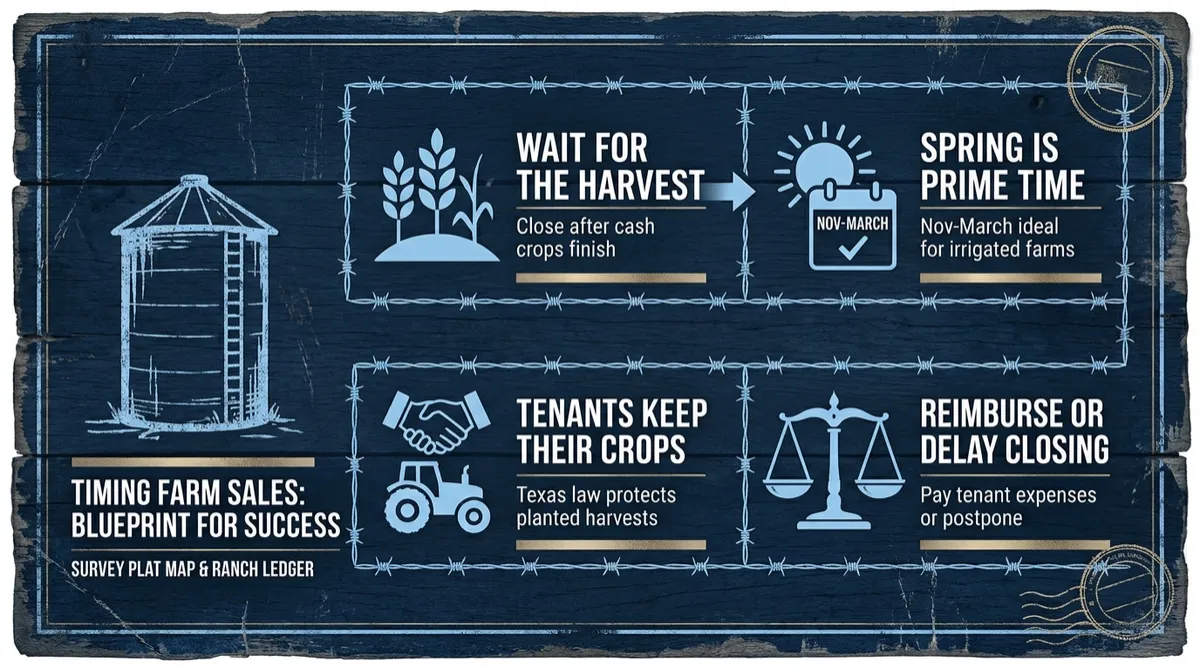
The Post-Harvest Transaction Window: Capitalize on the prime November-to-March season when cash crops are harvested, allowing buyers and sellers to operate with sharp financial pencils and clear property access.
The Texas Tenant Harvest Doctrine: Navigate the strict legal rights of agricultural tenants to harvest what they plant by structuring precise reimbursement protocols that prevent costly closing delays.
Active Crops as Valuation Proof: Utilize standing summer crops, such as corn and cotton, as undeniable, living proof of well capacity and soil capability to command premium land valuations.
The Seamless Possession Strategy: Master the complex side negotiations surrounding water assets, crop cycles, and tenant continuity to eliminate buyer anxiety and accelerate the closing process.
The Market Shift
For generations, the traditional approach to selling agricultural real estate was largely reactionary. Landowners, often inheriting a family farm or managing it as an absentee investment, would decide to sell and immediately put the property on the market, completely ignoring the complex biological and economic cycles happening on the dirt itself. This outdated, status quo method frequently results in a myriad of complications: delayed closings, contentious disputes with existing tenants over unharvested crops, and buyers walking away because possession dates are too deeply entangled in agricultural red tape. The old way treats a farm like a residential house, assuming that once the paperwork is signed, the keys can simply be handed over.
Craig champions a radically different, data-driven alternative. According to Craig, modern land transactions must be surgically aligned with the agricultural calendar. Rather than fighting the natural rhythm of the farm, his methodology leverages the crop cycle as a strategic asset. Craig argues that timing the sale around specific harvest windows and proactively managing tenant relationships transforms a chaotic transaction into a streamlined, highly profitable transfer of assets. By understanding the critical differences in crop inputs, such as the high stakes of a summer corn crop versus the flexible negotiation potential of winter wheat, landowners can dictate the terms of the market rather than being penalized by it.
The Land Philosophy
To maximize the value of agricultural land, sellers must undergo a profound mental shift. A farm is not just a static piece of real estate; it is an active, breathing economic engine with substantial capital deployed into the soil long before a harvest is realized. Craig’s philosophy dictates that when you sell a farm, you are not just selling dirt and water rights, you are navigating the transfer of momentum.
Whether it is seed, fertilizer, or irrigation fuel, there is always a biological investment growing on the property. Craig points out that buyers are naturally eager to take possession and begin their own operational planning, but the current operator, whether that is the owner or a long-term tenant, has a vested financial interest in seeing the current crop through to harvest. Successfully brokering a land deal requires balancing the buyer's timeline with the operator's right to their agricultural ROI.
"When you sell a farm, you are orchestrating a transition of livelihoods, seasons, and investments. The most successful transactions happen when we anticipate the crop cycle, honor the tenant's labor, and eliminate the 'scary fog' of unknowns before a buyer ever makes an offer." — Craig Cooper
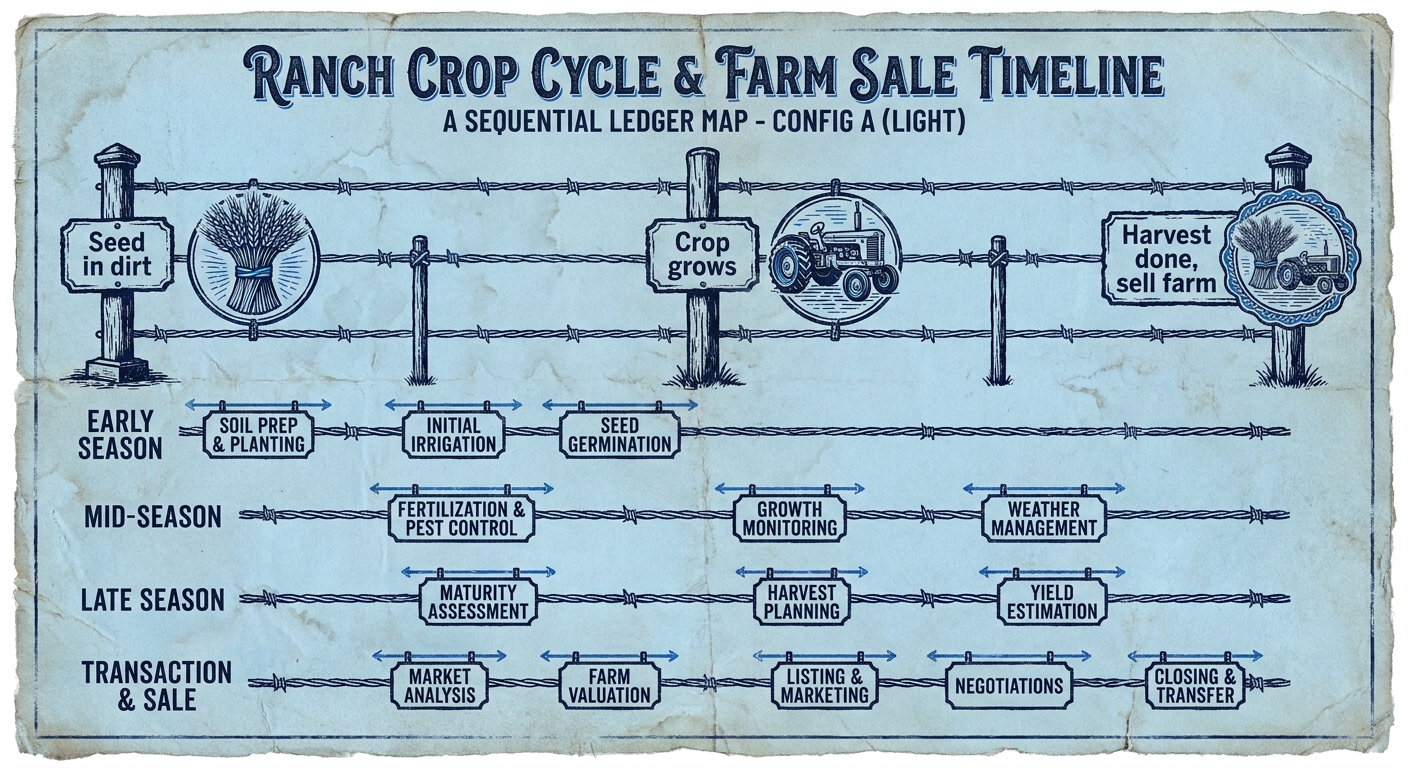
According to Craig, moving a transaction from a state of anxious unknowns to a framework of clear, documented expectations is the ultimate differentiator in securing a premium price.
The Deal Blueprint
Executing a flawless farm transaction requires a multi-phased approach that addresses crop seasons, tenant legalities, and strategic listing timelines. Craig’s proprietary blueprint breaks down the complexities of agricultural real estate into actionable, predictable steps.
Utilizing the Growing Season as Living Proof of Capability
The Action: Before the harvest even occurs, Craig advises utilizing the active growing season as the ultimate marketing tool. While it is difficult to close a sale in the middle of June when fields are loaded with expensive summer cash crops like corn or cotton, that exact time frame serves as irrefutable visual proof of the farm's capabilities. Rather than hiding the farm from the market during this time, sellers should use the active crop to demonstrate well outputs and soil fertility. Craig provides comprehensive yield records to prospective buyers, but he notes that nothing replaces the visual impact of driving by a thriving cornfield during a dry Texas summer.
The Business ROI: The return on investment for this action is maximized buyer confidence and premium valuation. When a buyer can physically see a strong crop, they no longer have to guess whether the irrigation pivots are functional or if the wells truly produce the stated gallons per minute.
"It's good for the buyer to see what you're growing. And yes, I do have the water. I do have this, but you probably won't take any ownership of that. If you sold it, you would have to wait until the crops are harvested generally to close on that farm." — Craig Cooper
By allowing the crop to stand as living proof of value, Craig ensures that the seller can command top dollar while simultaneously setting realistic expectations that the actual closing and transfer of possession will strategically follow the harvest.
Navigating the Texas Tenant Rights Doctrine
The Action: A significant portion of farmland is operated by tenants, especially in cases of absentee or inherited ownership. Craig’s approach requires tackling tenant rights at the very inception of the listing process. Under Texas law, agricultural tenants hold robust legal protections. If a tenant plants a crop, they possess the inherent right to harvest it, regardless of whether the land changes hands. Craig initiates early, transparent negotiations with the existing tenant. This involves exploring three primary paths: determining if the tenant wishes to purchase the farm themselves, negotiating for the tenant to stay on and operate for the new buyer, or structuring a mutually beneficial exit strategy.
The Business ROI: Addressing tenant rights proactively prevents catastrophic delays at the closing table. If a buyer purchases a farm with the intention of immediately working the land, but an existing tenant legally refuses to vacate until a wheat crop is harvested in July, the deal can collapse. By bringing the tenant into the conversation early, Craig creates a harmonious transition. In many cases, retaining the tenant is highly lucrative for an absentee buyer because the tenant already possesses deep, intimate knowledge of the property’s wells, sprinklers, and soil idiosyncrasies.
"A tenant in Texas has the right to harvest any crop he puts in." — Craig Cooper
By honoring this legal right and navigating the relationship with respect, sellers avoid litigation, and buyers inherit a stable, drama-free operation.
Executing the Post-Harvest Listing Strategy
The Action: Timing is everything in agricultural real estate. While summer showcases the farm’s potential, the actual transactional window requires a different strategy. Craig specifically targets the post-harvest season for pushing active sales and finalizing contracts on irrigated farmland. Once the high-value summer cash crops, such as corn, cotton, and sorghum, are out of the field, the land becomes a blank canvas. This is the moment to aggressively market the property, negotiate terms, and execute the closing.
The Business ROI: Aligning the sale with the post-harvest window creates a frictionless transfer of possession. Buyers are looking at clean fields and can immediately begin prepping the dirt for their own spring planting cycle. Furthermore, this timing aligns with the agricultural financial cycle.
"November, December, January, February, March is really on irrigated farmland… that is your hot months there to start the process." — Craig Cooper
During these months, farmers have completed their harvest, calculated their annual revenues, and are operating with "sharp pencils." They know exactly what capital they have to deploy for land acquisition, making them highly motivated, financially qualified buyers ready to transact without the baggage of negotiating around standing crops.
The Reimbursement Framework for Early Possession
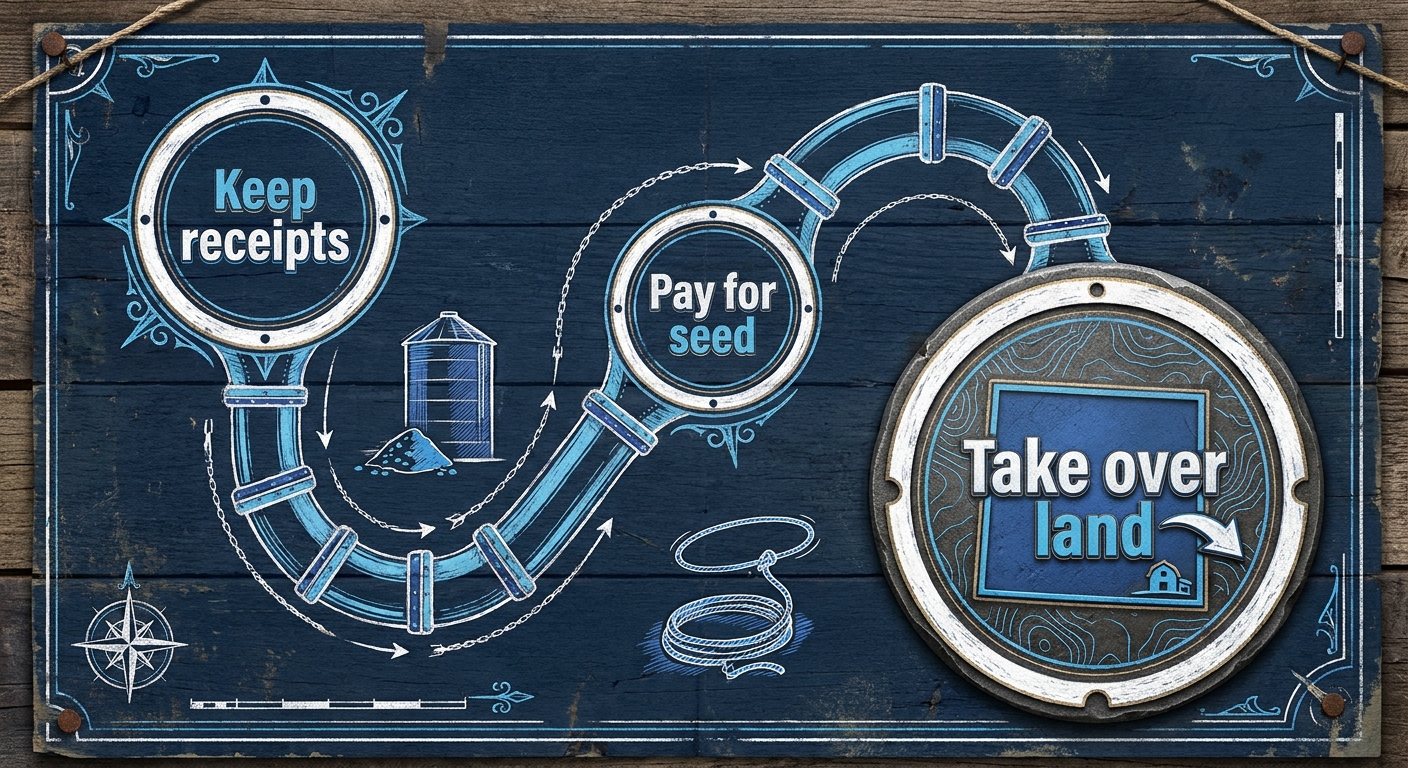
The Action: Inevitably, there are scenarios where a farm must be sold while a crop is still in its early stages, such as newly planted winter wheat. Because wheat is a lower-expense crop compared to summer corn, Craig utilizes a detailed reimbursement framework to facilitate early possession for the buyer. If the buyer intends to farm the land themselves, Craig establishes a strict tracking system with the current tenant or seller. Every input, from seed and fertilizer to chemical spraying applications, is documented, receipted, and negotiated as part of the buyout.
The Business ROI: This meticulous accounting unlocks liquidity and flexibility. It allows a seller to move a property on a faster timeline without financially punishing the tenant who has already begun preparing for the next season.
"Until closing, you keep every receipt for spraying, for whatever you do, and we'll get you reimbursed on that crop." — Craig Cooper
This level of granular negotiation solves the side-issues that frequently derail farm sales. By systematically reimbursing the tenant for their direct expenses, Craig clears the legal and financial hurdles, allowing the buyer to take immediate control of the property and its future yields.
The Podcast Conversation
A farm sale has to work alongside the season already underway. Growing crops, a tenant’s investment, and a buyer’s plans can all run on different timelines, making early conversations especially valuable.
In this episode, Craig discusses crop cycles, harvest rights, listing timing, and reimbursement for work already done. The conversation focuses on planning a transition that accounts for the people and agricultural activity involved.
The Landowner's Advantage
Adopting Craig’s crop-aligned transaction strategy provides a massive, long-term competitive advantage for landowners. Selling a farm is rarely just a financial transaction; it involves unwinding years of agricultural investment, navigating complex tenant livelihoods, and timing the volatile Texas weather. By understanding the distinct differences in crop cycles, respecting the strict parameters of tenant harvest rights, and timing the market during the optimal winter transaction window, landowners can entirely bypass the stress and legal friction that typically plague farm sales.
In Craig’s experience, anticipating these side negotiations before they become deal-breakers transforms the seller into a position of absolute leverage. You are no longer crossing your fingers and hoping for a smooth closing; you are executing a proven, methodical transition of an agricultural business.
Contact Craig at (806) 484-1190 or [email protected].