Unlocking Hidden Land Value in Texas Dryland Acreage
The Deal Brief
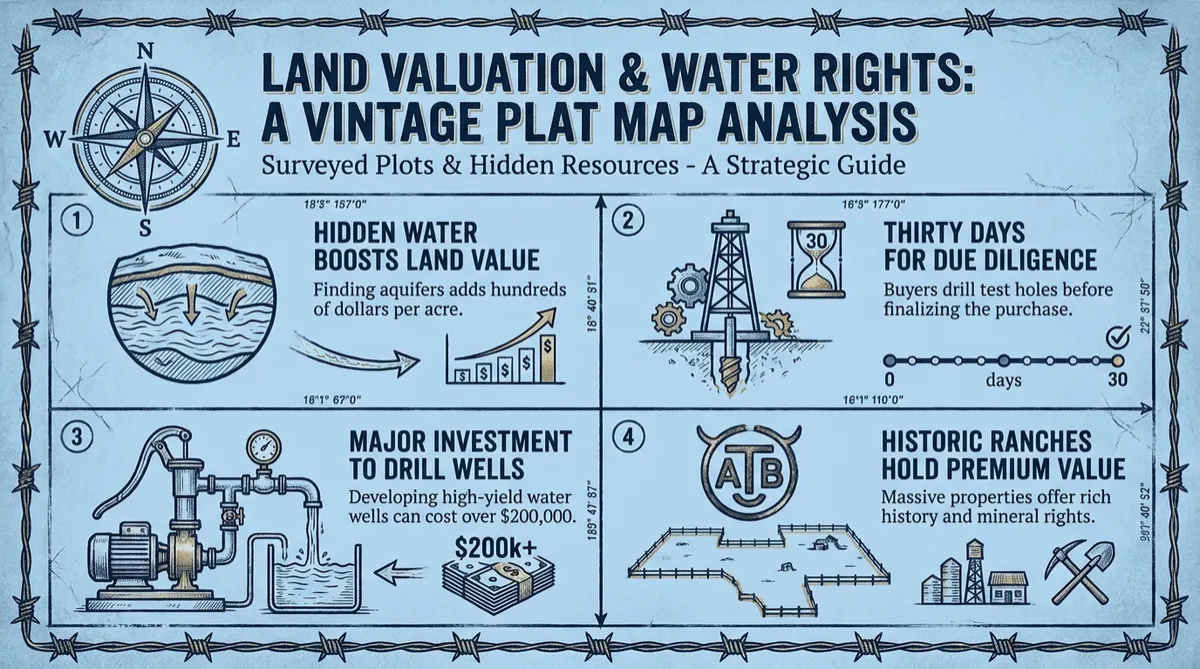
The Subsurface Arbitrage: Uncovering hidden water resources in legacy dryland acreage can increase land valuation by upwards of $500 to $600 per acre prior to a sale.
The CapEx Buyout Model: Treat agricultural land sales like business acquisitions. Buyers are actively seeking undercapitalized dryland farms where they can inject heavy capital (e.g., $200,000+ per well) to force asset appreciation.
Strategic Due Diligence: Sophisticated land transactions now require a structured 30-day testing window for buyers to drill exploratory holes, actively hunting for 1,000-gallon-per-minute veins in the Ogallala aquifer.
The Generational Wealth Pivot: Legacy landowners must pivot from a "surface-only" valuation model to a comprehensive resource audit before listing, ensuring they do not leave millions in untapped equity on the table.
The Market Shift
For generations in the Texas Panhandle and surrounding regions, a significant portion of agricultural acreage has been successfully managed as dryland farming. According to Craig Cooper, roughly fifty percent of the properties in these northern territories remain dryland today. The legacy approach, the Old Way, is rooted in a cautious, low-overhead mindset. Families who have owned the land for over a century have perfected crop rotation, optimized their set-asides, and learned to yield profits without the staggering expense of irrigation infrastructure. For many of these generational owners, dryland farming is simply a preference; they want to avoid the logistical hassle and the heavy capital expenditure required to bring water to the surface.
However, this traditional reliance on the status quo creates a massive valuation gap when it comes time to transition the asset.
When a family decides to sell a 100-year-old dryland farm, they traditionally price it based on its historical surface yield. Craig argues that this is where sellers leave life-changing money on the table. The modern agricultural real estate market has shifted dramatically. Today’s sophisticated buyers, whether they are institutional agricultural funds or expanding mega-farmers, do not look at dryland for what it currently is. They look at it for what it can become.
In Craig's experience, modern buyers operate much like corporate acquisition firms. When a business is sold, the previous owner has often run out of the energy or capital required to scale it to the next level. The new buyer acquires the business specifically to inject fresh resources and force appreciation. Land is no different. Modern buyers are actively seeking out dryland acreage with the specific intent of deploying massive capital into subsurface water development. By contrasting the generational, risk-averse mindset with this aggressive, data-driven development strategy, landowners can fundamentally re-categorize their asset class before going to market.
The Land Philosophy
To maximize the exit value of a farm or ranch, sellers must adopt a radical shift in how they view their dirt. Craig champions a proprietary mental model that moves away from "Surface Yield Valuation" and toward "Subsurface Asset Optimization." You can no longer look at a farm and assume its value is dictated solely by the topsoil and the seasonal rainfall.
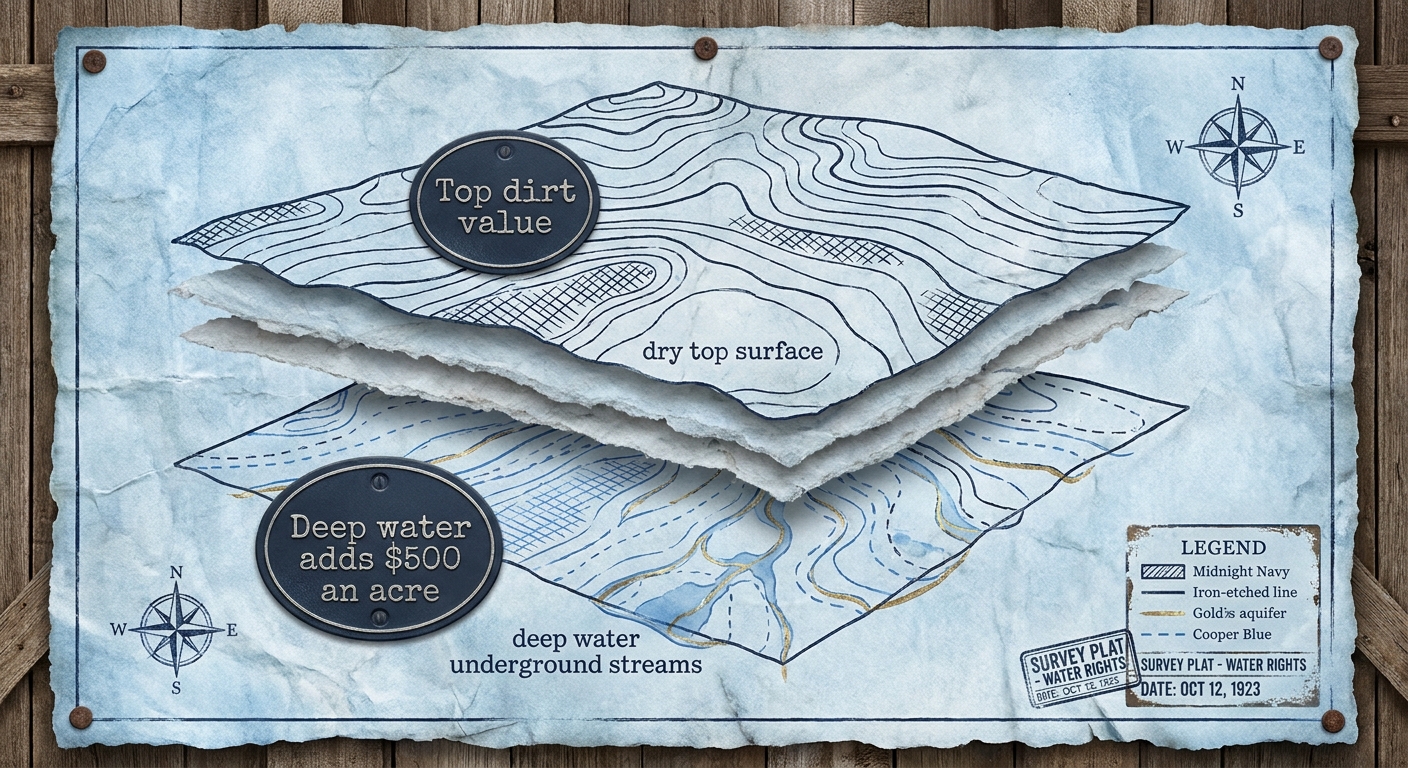
According to Craig, the true wealth of Texas real estate often lies dormant underground. Even in areas where surface ponds have dried up and local farm store gossip dictates that an area is bone-dry, modern hydrology tells a different story.
"The Aquifer Arbitrage is the realization that land valuation is entirely dependent on the capital a buyer is willing to deploy below the surface. A seller's dryland is a buyer's blank canvas. If you own the dirt, you must audit the depths before you price the asset, because in today's agricultural economy, water isn't just a resource—it is liquid gold that dictates the highest and best use of the property." — Craig Cooper
This philosophy requires landowners to recognize that the Ogallala aquifer is not a uniform, predictable bathtub; it is a complex underground network of flowing streams. According to Craig, there are countless instances in Hansford County and Randall County where a property historically deemed entirely devoid of water was sold, only for the new buyer to discover a massive underground river. By understanding this philosophy, sellers can take proactive, low-cost steps to assess their subsurface potential, effectively capturing the "water premium" for their own family legacy rather than passing it blindly to the next buyer.
The Deal Blueprint
Transforming a stagnant dryland farm into a highly sought-after, premium-priced asset requires a precise, phased approach. Craig breaks down the exact transactional mechanics of this subsurface conversion play into three distinct stages.
Phase 1: The Pre-Market Resource Audit
Before a property ever hits the market, the seller must undergo a strategic assessment of the land's hidden potential. Craig advises that families who have inherited dryland farms should never assume the historical use is the highest possible use. The action here is to leverage modern mapping technology, historical well logs, and regional hydrological data to paint a picture of what lies beneath the grass.
The business ROI of this phase is immediate and profound. By gathering this data without having to spend massive amounts of upfront capital on immediate drilling, sellers can adjust their asking price based on high-probability potential rather than just historical dryland comparables.
"You could probably get five or six hundred dollars more an acre if it's there." — Craig Cooper
Capturing a $500-per-acre premium on a 2,000-acre farm equates to a $1,000,000 swing in the seller's favor, generated entirely by a shift in data and positioning.
Phase 2: Structuring the Exploratory Due Diligence
Once the property is positioned to attract well-capitalized buyers, the transaction mechanics shift to the contract phase. Buyers who specialize in converting dryland to irrigated farmland will require time to verify the subsurface data. Craig structures these deals to protect the seller while giving the buyer the necessary runway to prove the asset's viability.
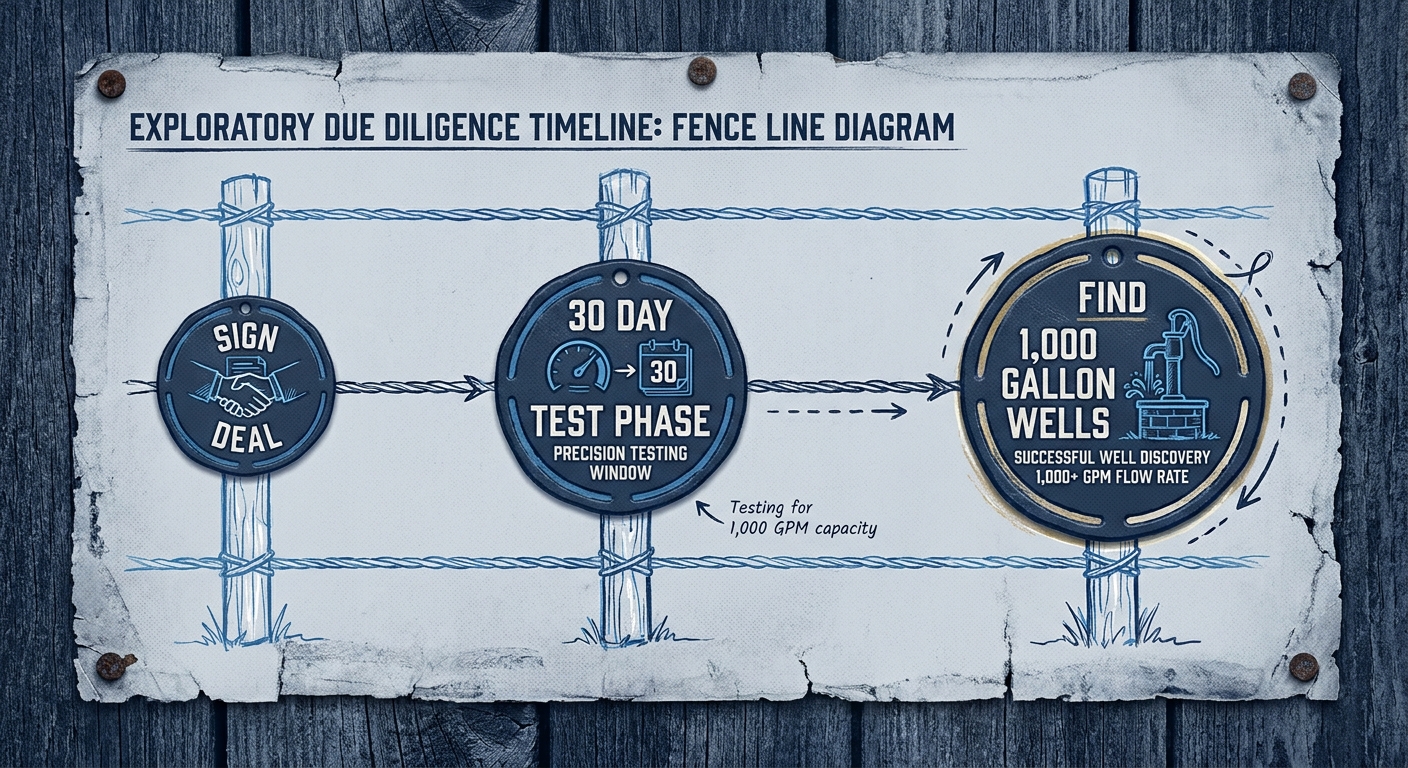
"What happens most of the time, the buyer will say, hey, can I have thirty days due diligence and I'll drill some test holes out there." — Craig Cooper
During this 30-day window, the buyer's action involves bringing in drilling crews to punch multiple exploratory holes, sometimes up to ten on a single property. They are not just looking for standard 300-to-500-gallon-per-minute wells; they are aggressively hunting for the 1, 000-gallon-per-minute gushers. The ROI for the seller is that facilitating this structured due diligence period allows the buyer to absorb the financial risk of the exploration. If the buyer strikes the high-volume water they need, the transaction closes at a premium valuation, validating the seller's strategic pricing.
Phase 3: The Capital Expenditure (CapEx) Transformation
The final phase of the blueprint is understanding the sheer scale of capital required to execute the conversion, which justifies the premium land price. Once the water is located, the real investment begins. According to Craig, a seller must understand the financial burden the buyer is taking on to fully appreciate the mechanics of the market.
Developing the infrastructure is a highly expensive, multi-layered logistical operation. The buyer must trench and run extensive electrical lines, secure three-phase power, erect center-pivot sprinklers, and install the well infrastructure, which includes massive motors and electric turbines.
"You're looking at two hundred thousand dollars, maybe more for just to develop one water well." — Craig Cooper
By understanding this CapEx burden, sellers can better negotiate the initial land sale. The ROI here is derived from market clarity. When Craig sits across the table from a buyer who is preparing to drop over a million dollars on infrastructure, he uses that knowledge to anchor the value of the raw land. The buyer is banking on a massive future yield optimization, and Craig ensures the seller extracts maximum upfront equity before that transformation takes place.
Craig shared his on-the-ground knowledge of the ranch’s historical significance. Having spent years trotting that land and gathering cattle, he pointed out the site of the Battle of Adobe Walls. He recounted the history of Billy Dixon, the buffalo hunter who altered the course of a historical standoff from a mile away with a Sharps rifle.
The Podcast Conversation
The way ground is used today is only one part of how an owner thinks about its value. Looking at the layers of an agricultural asset helps bring the next decision into focus.
In this episode, Craig discusses dryland acreage, water exploration, development costs, and the importance of understanding what lies beneath the surface. The conversation considers the questions owners face when evaluating the next step.
The Landowner's Advantage
Adopting this multi-layered, subsurface-first strategy provides landowners with a permanent competitive advantage in the real estate market. Instead of passively accepting legacy pricing for dryland acres, sellers who follow Craig’s approach take active control of their asset’s narrative. They attract better-capitalized buyers, structure contracts that incentivize high-yield discovery, and ultimately capture the maximum possible premium for their family’s generational wealth. In a market where the panhandle is turning lush and green, and resources are fiercely contested, knowing exactly what lies beneath your grass is the ultimate leverage.
Contact Craig at (806) 484-1190 or [email protected].